Built for the future.
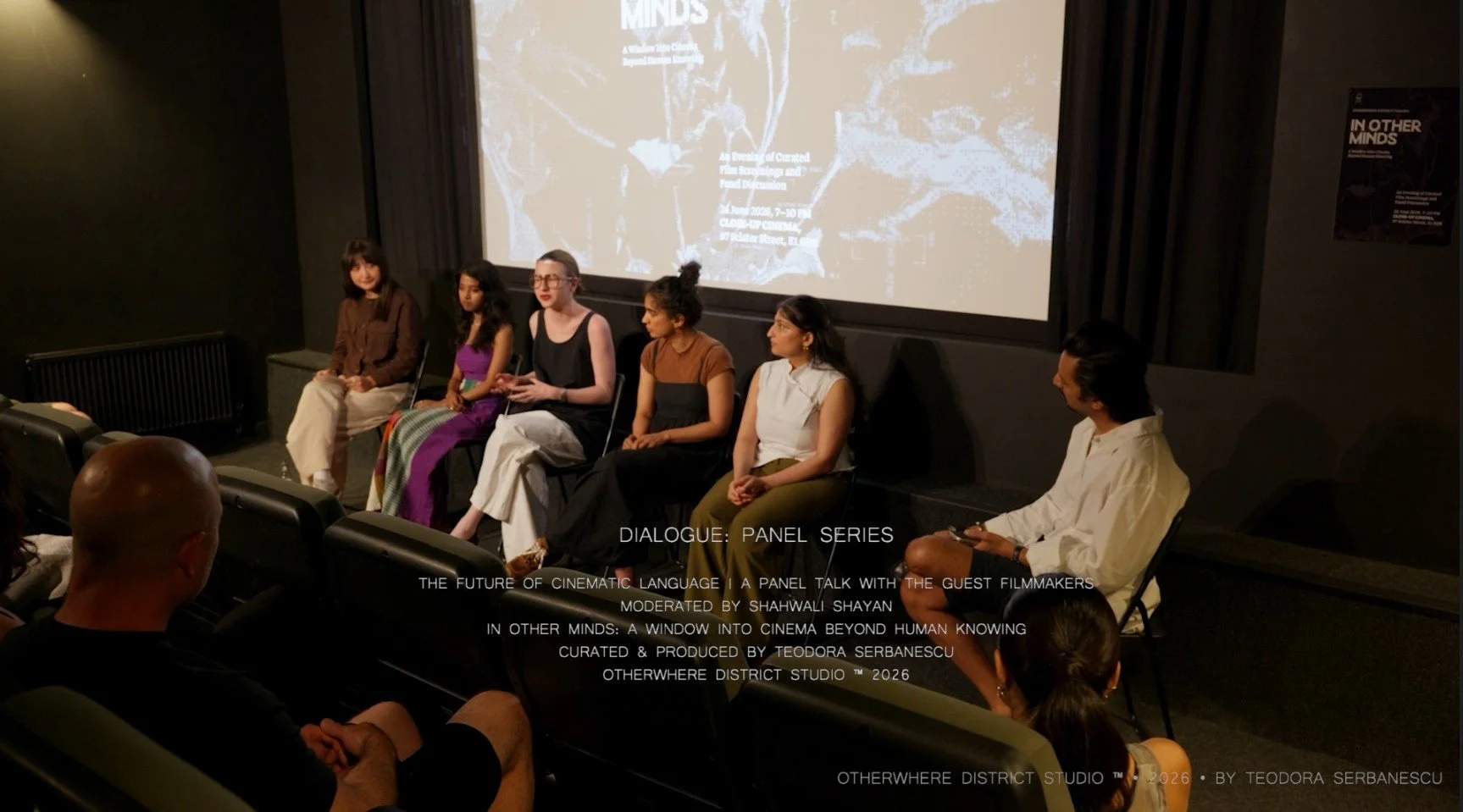
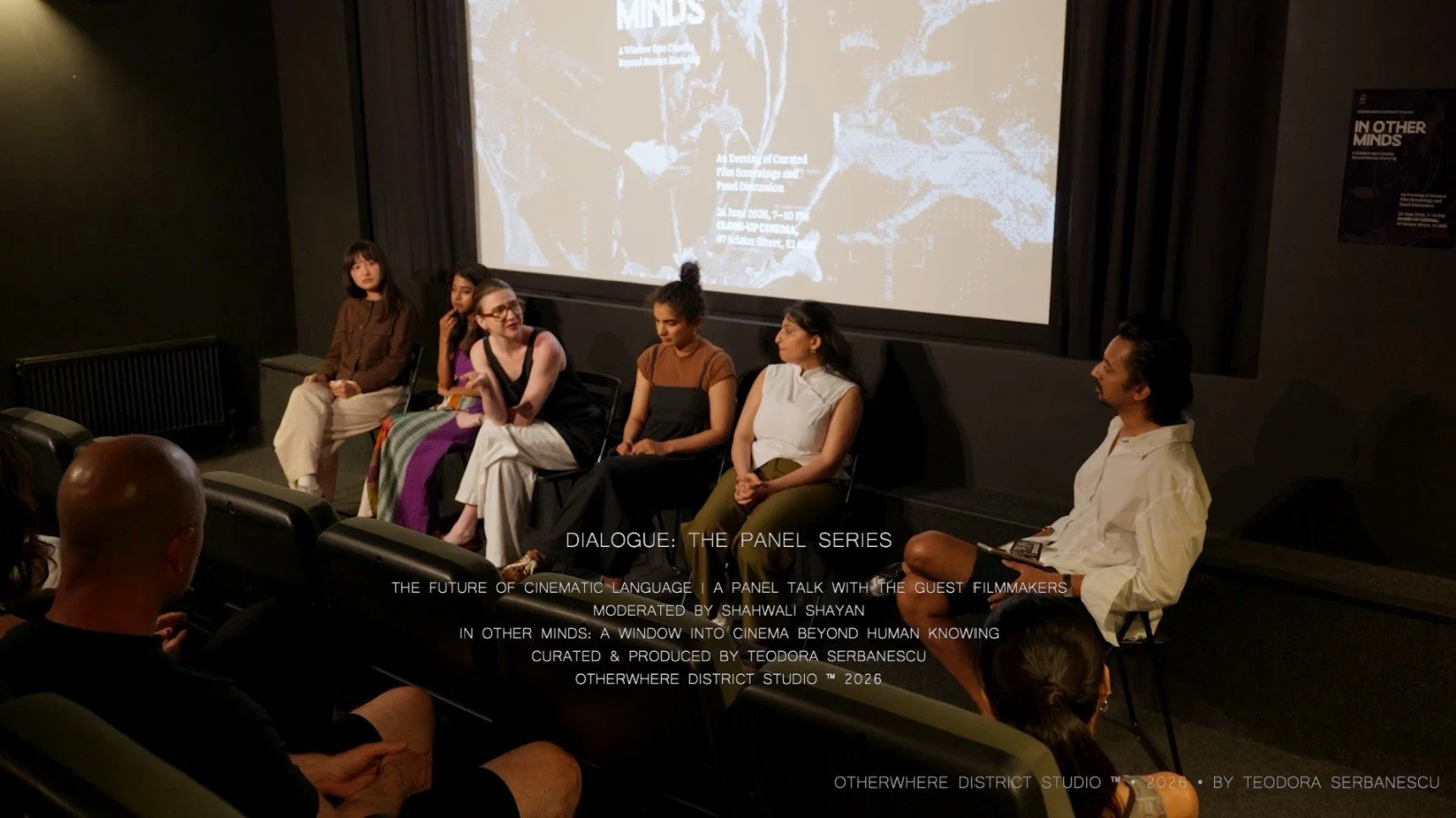
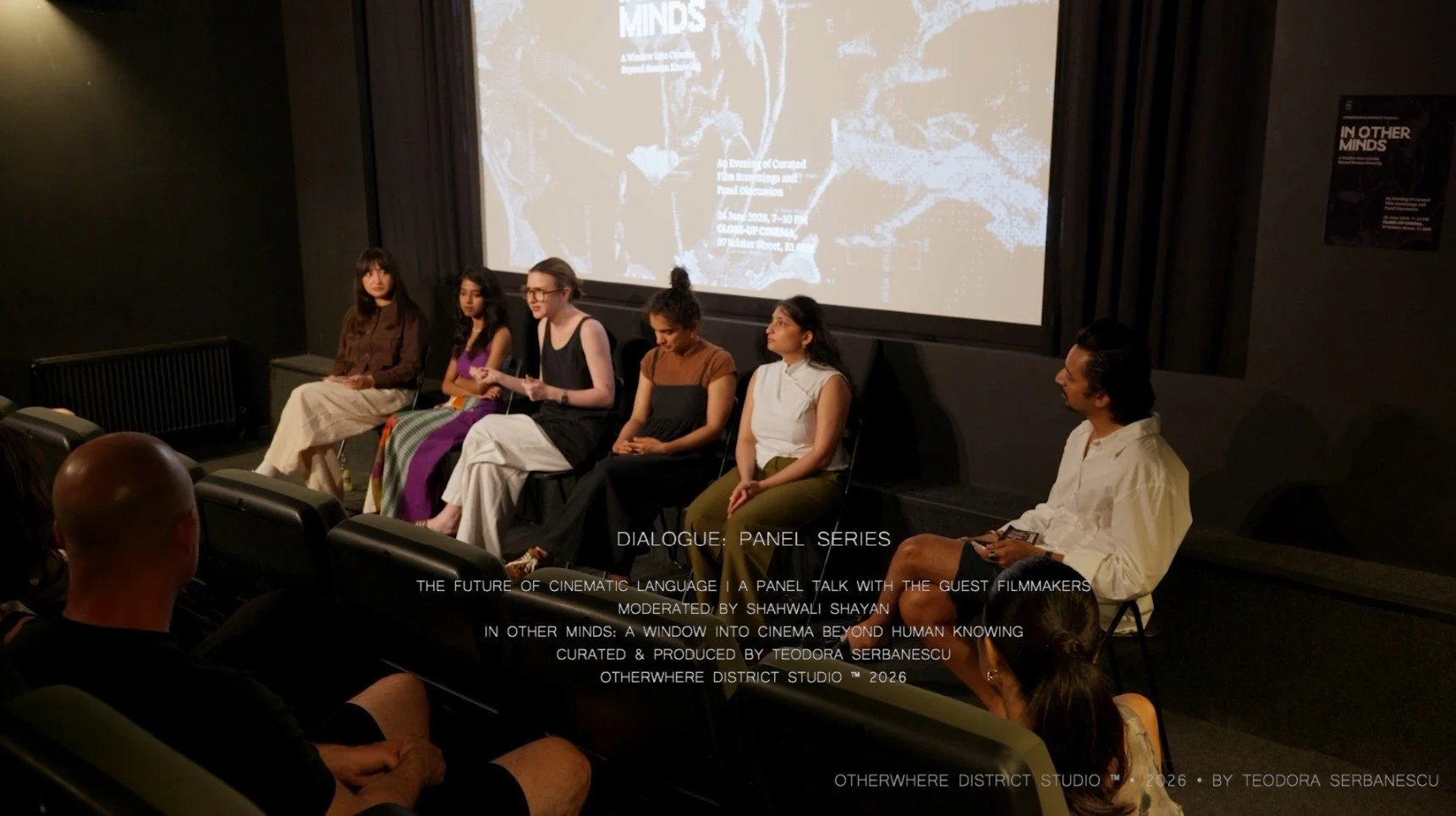
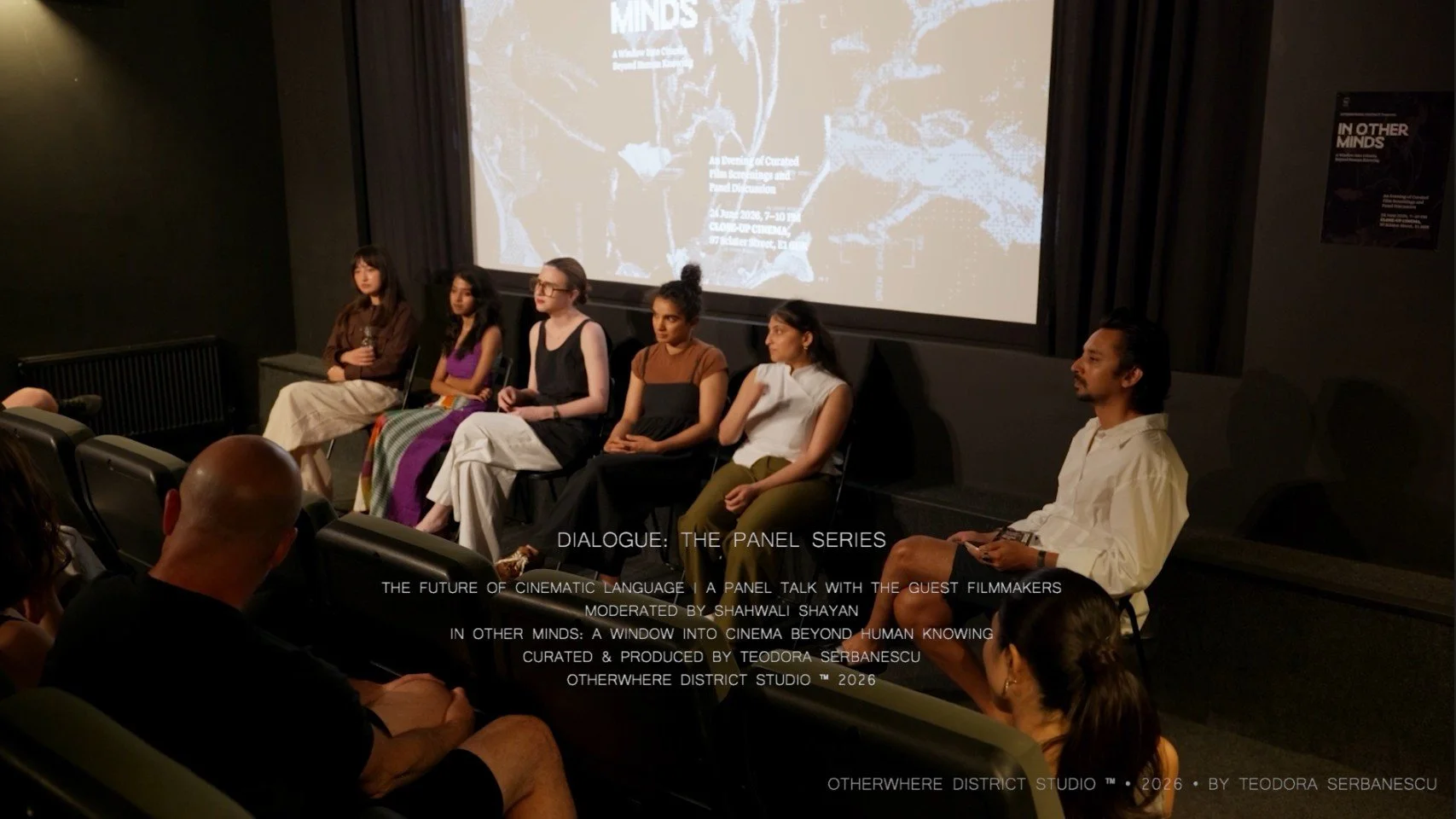
At its core, The Future of Cinematic Language asks whether cinema can become a less centralised way of seeing — one capable of holding multiple forms of intelligence without reducing them to a single voice, image, or author. It explores how emerging technologies and decentralised storytelling might dismantle the traditional pedestal, giving rise to living, polyphonic cinema. By shifting from a single author's vision to an ecosystem of shared perspectives, the medium can finally reflect the complex, collective nature of human and non-human intelligence.
What Sets our panel series apart?
The curation of In Other Minds does something quietly radical. It takes the word intelligence — a term that, in 2026, increasingly belongs to machines — and redistributes it across ancestry, material, animals, land, and the body.
From this shift emerges a larger question: what forms of knowing does cinema need right now? And might they be precisely the forms that resist being coded, extracted, centralised, or reduced to a single point of view?
Cinema has historically been one of the most centralising mediums: one camera, one eye, one author, one perspective. Yet the intelligences explored across In Other Minds are decentralised, distributed, embodied, and often more-than-visual.
Can cinema hold these forms of knowing without quietly re-centring them?
The panel brings together the filmmakers of In Other Minds to explore what happens when cinema encounters subjects that cannot easily speak back — a landscape, an animal, a material, an inherited ritual, or a body shaped by larger systems. How do we film these subjects with care? What does it mean to do justice to something without speaking over it?
The conversation also turns inward, asking the filmmakers what changed through the process of making their films. What did they begin to understand differently? What makes a story feel urgent enough to become a film? And when technology fails, glitches, misunderstands, or pushes back, can those limitations become part of the creative language itself?
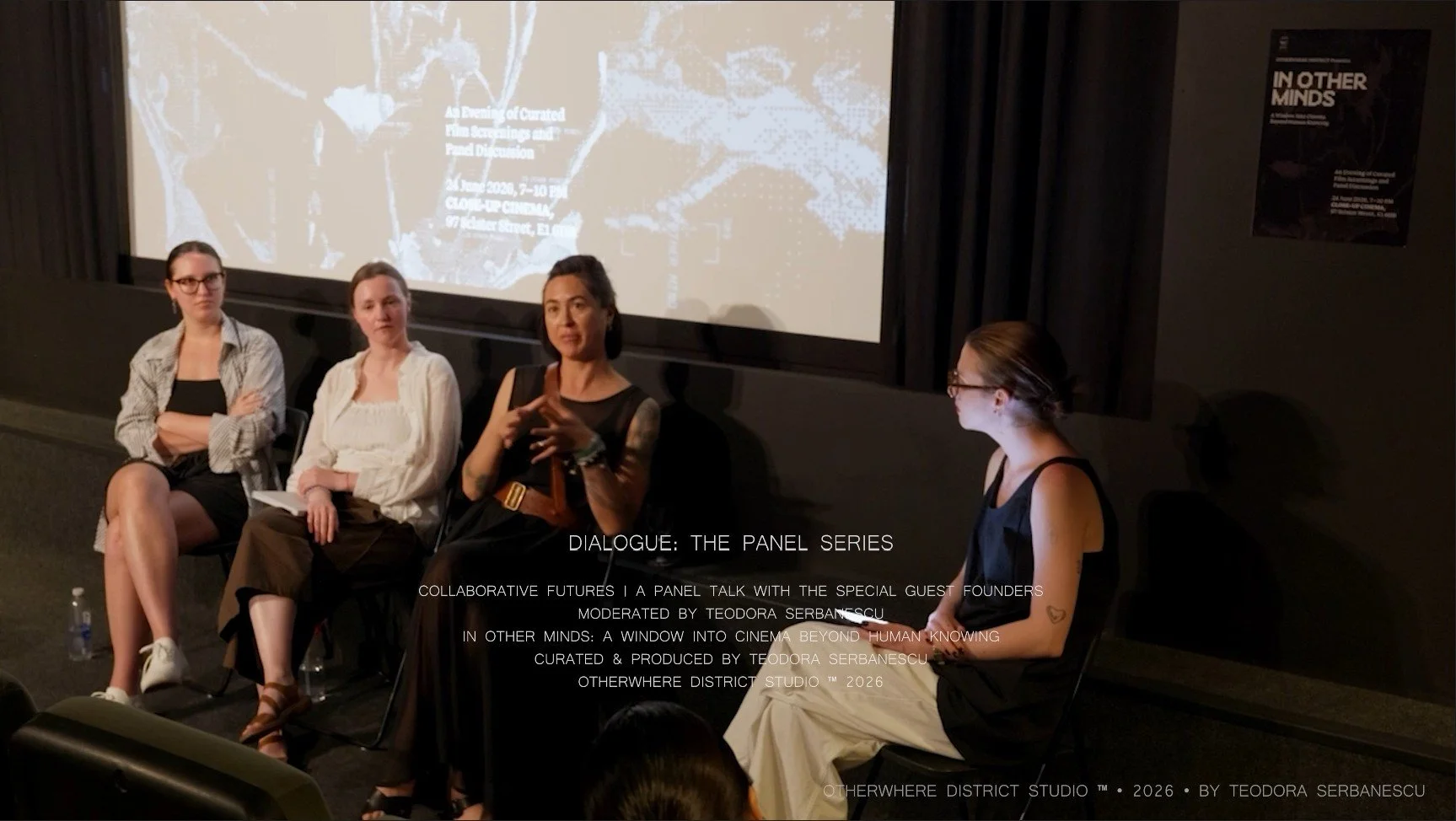
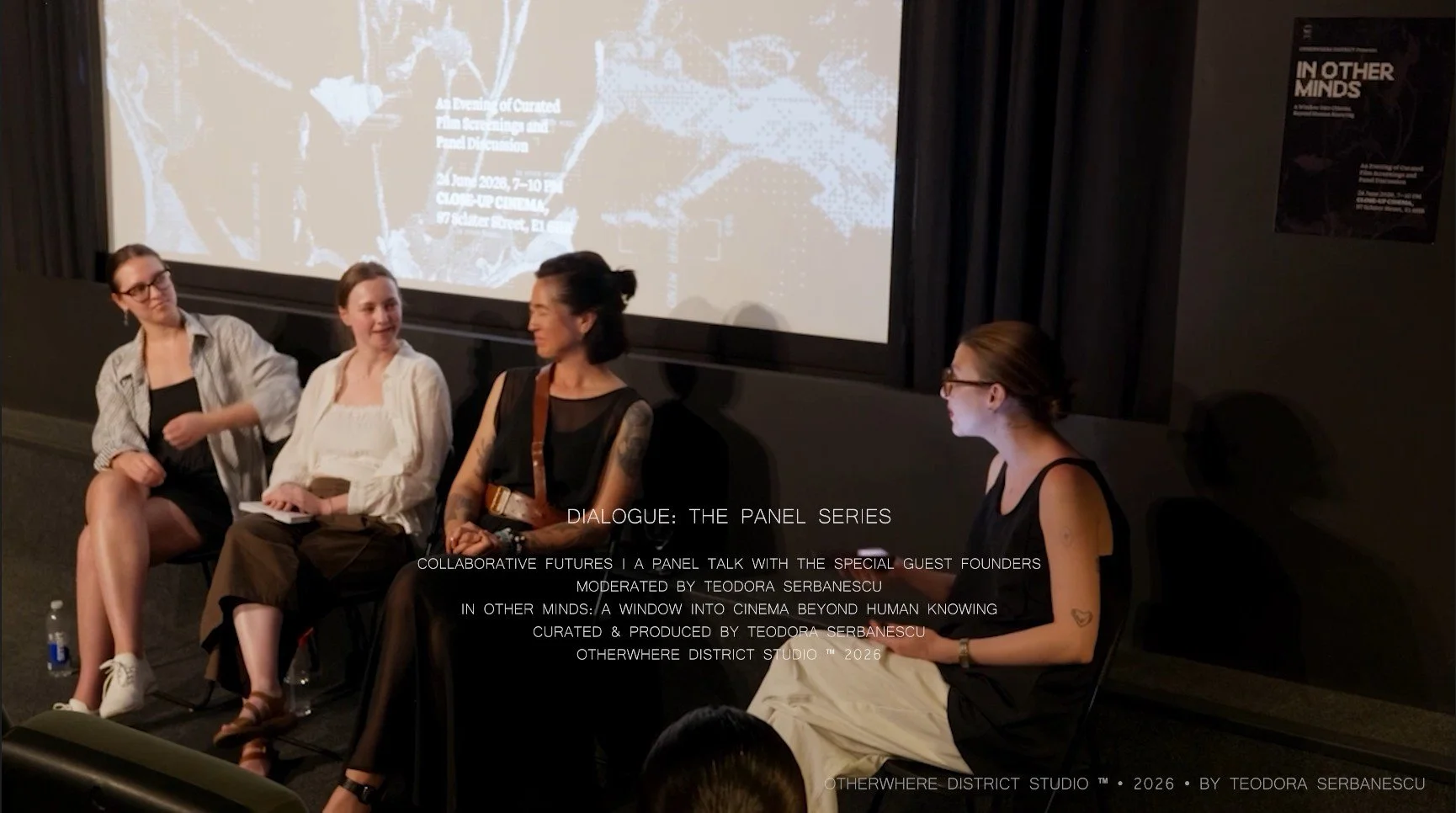
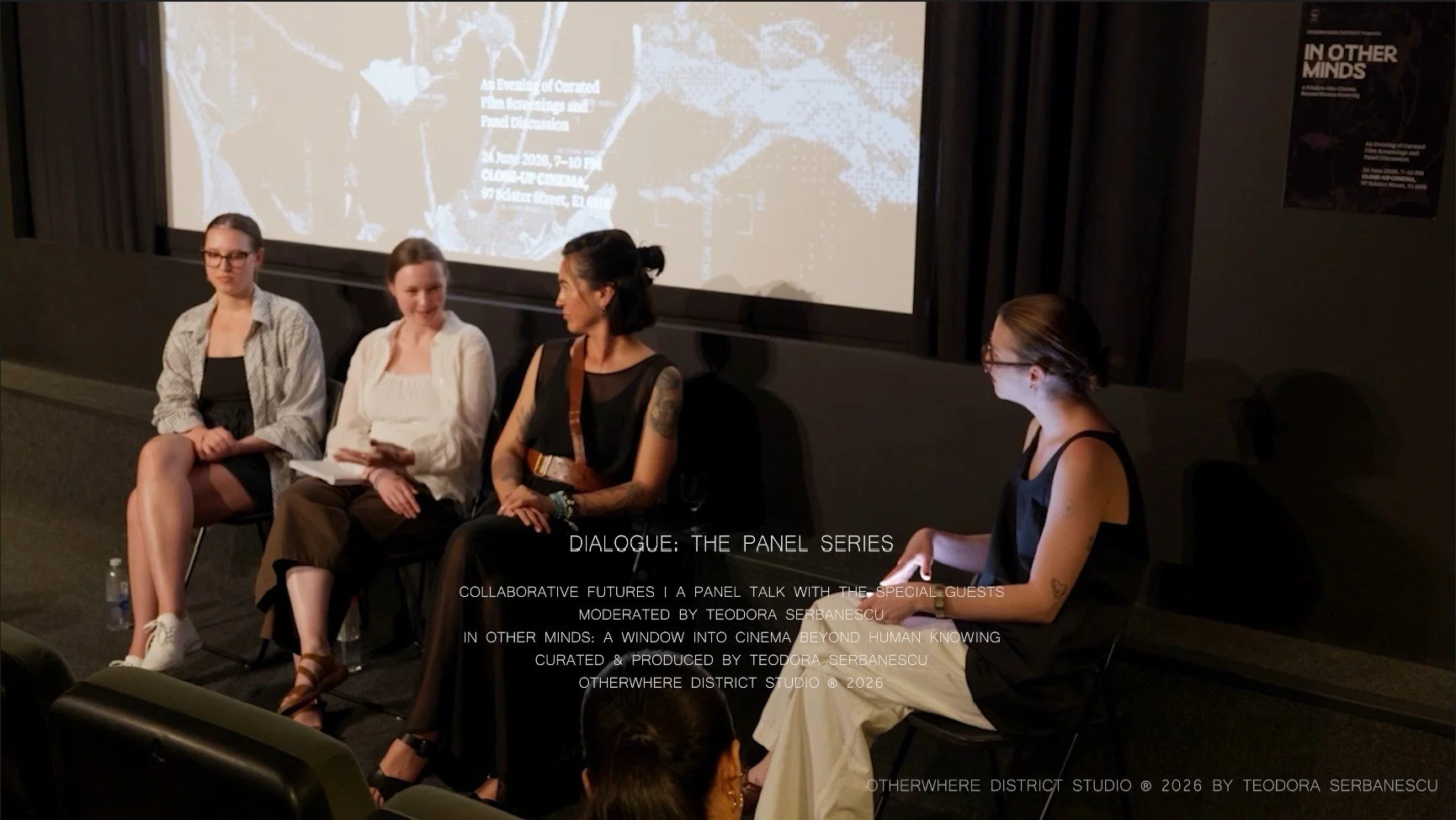
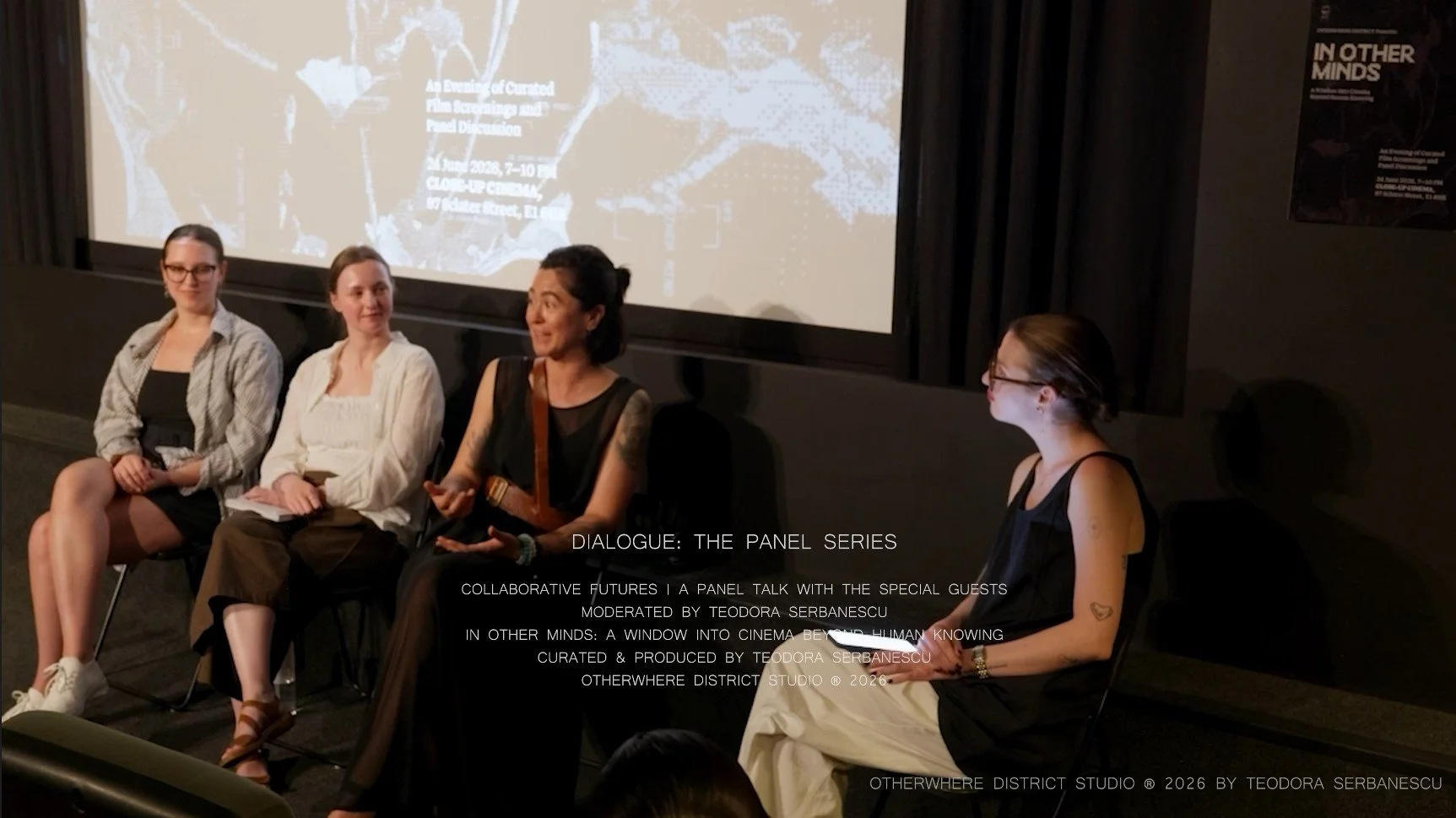
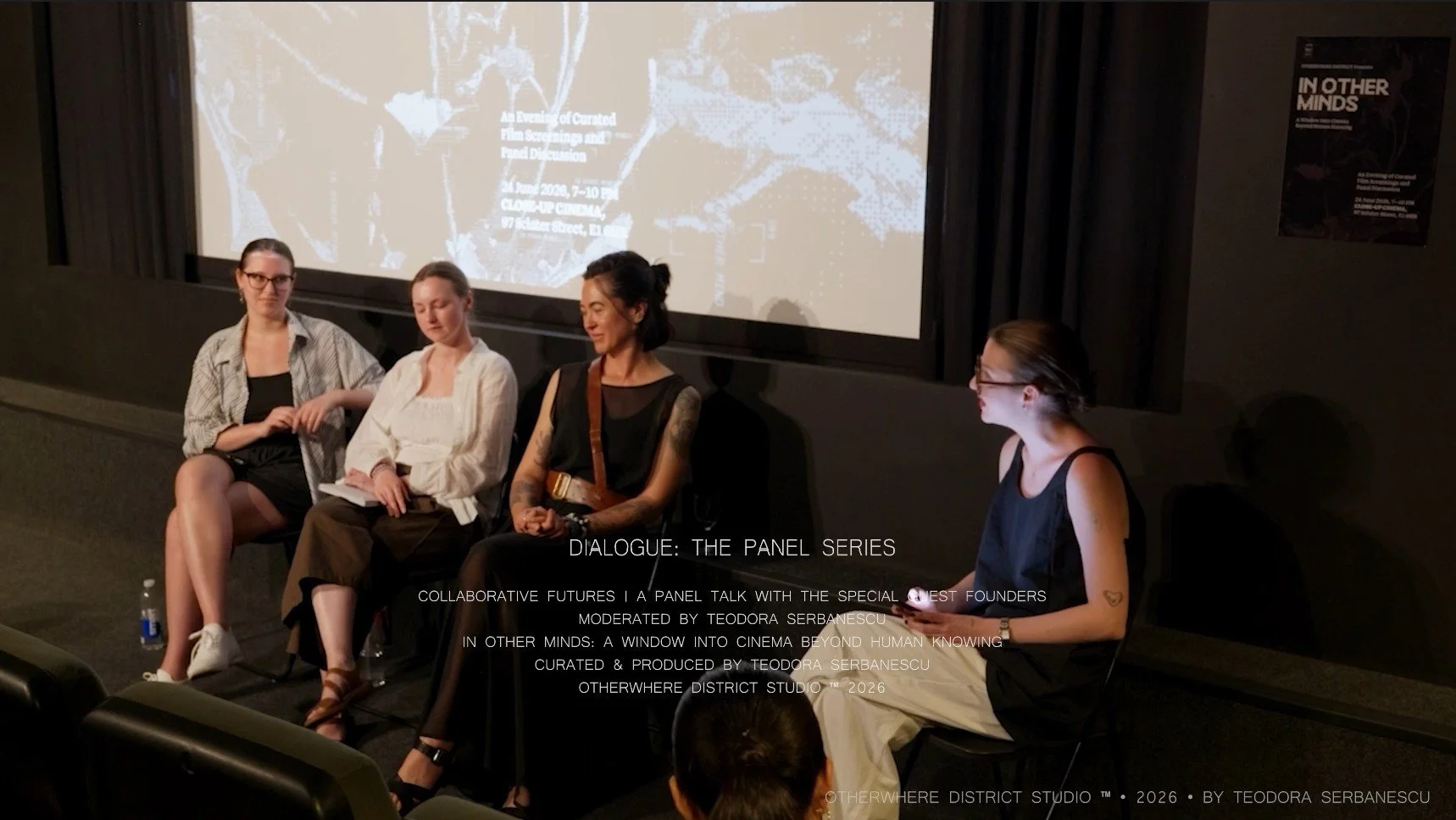
COLLABORATIVE FUTURES
A Panel Talk Series on Embodying What You Know — and Leading Others Through It.
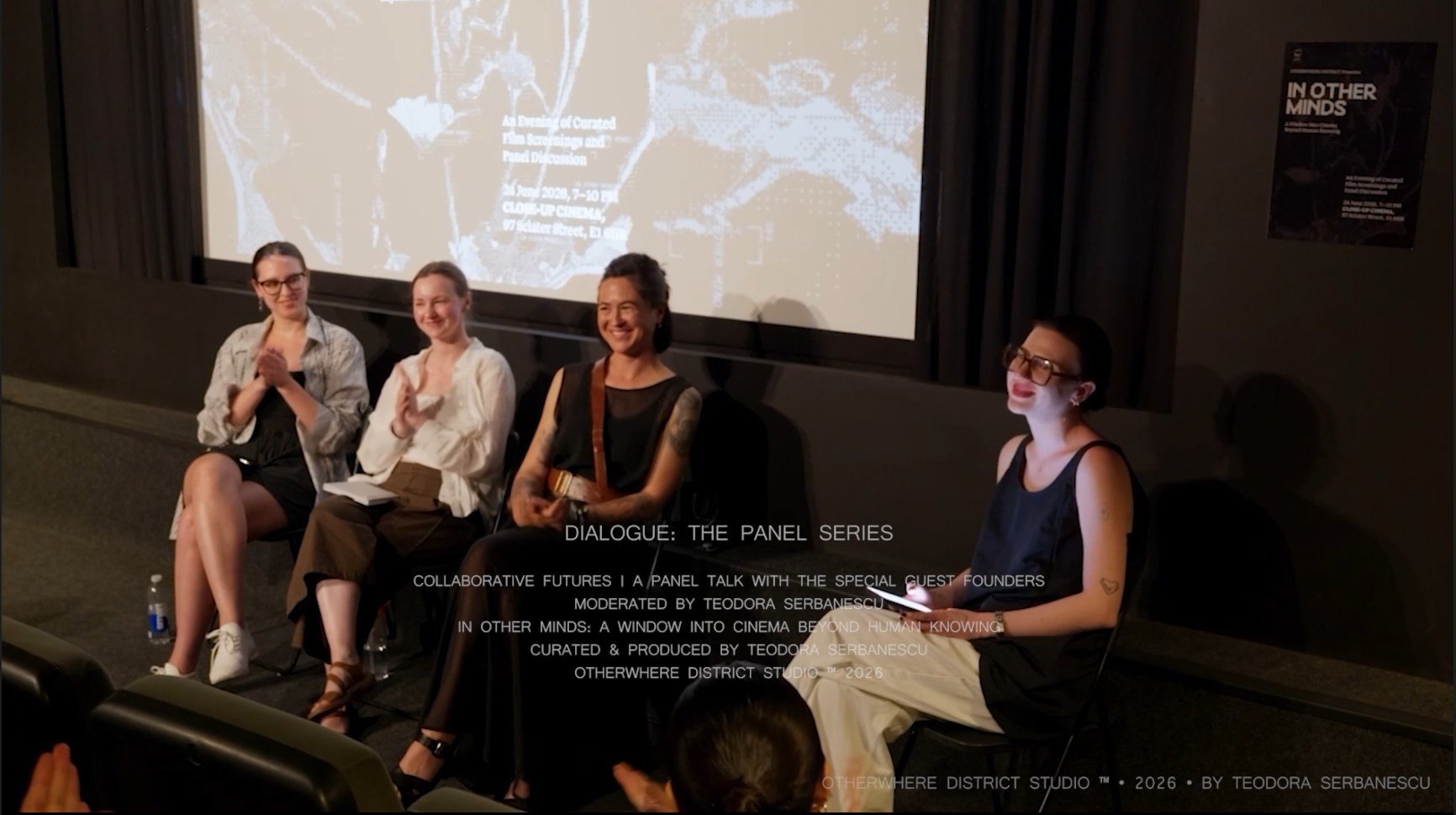
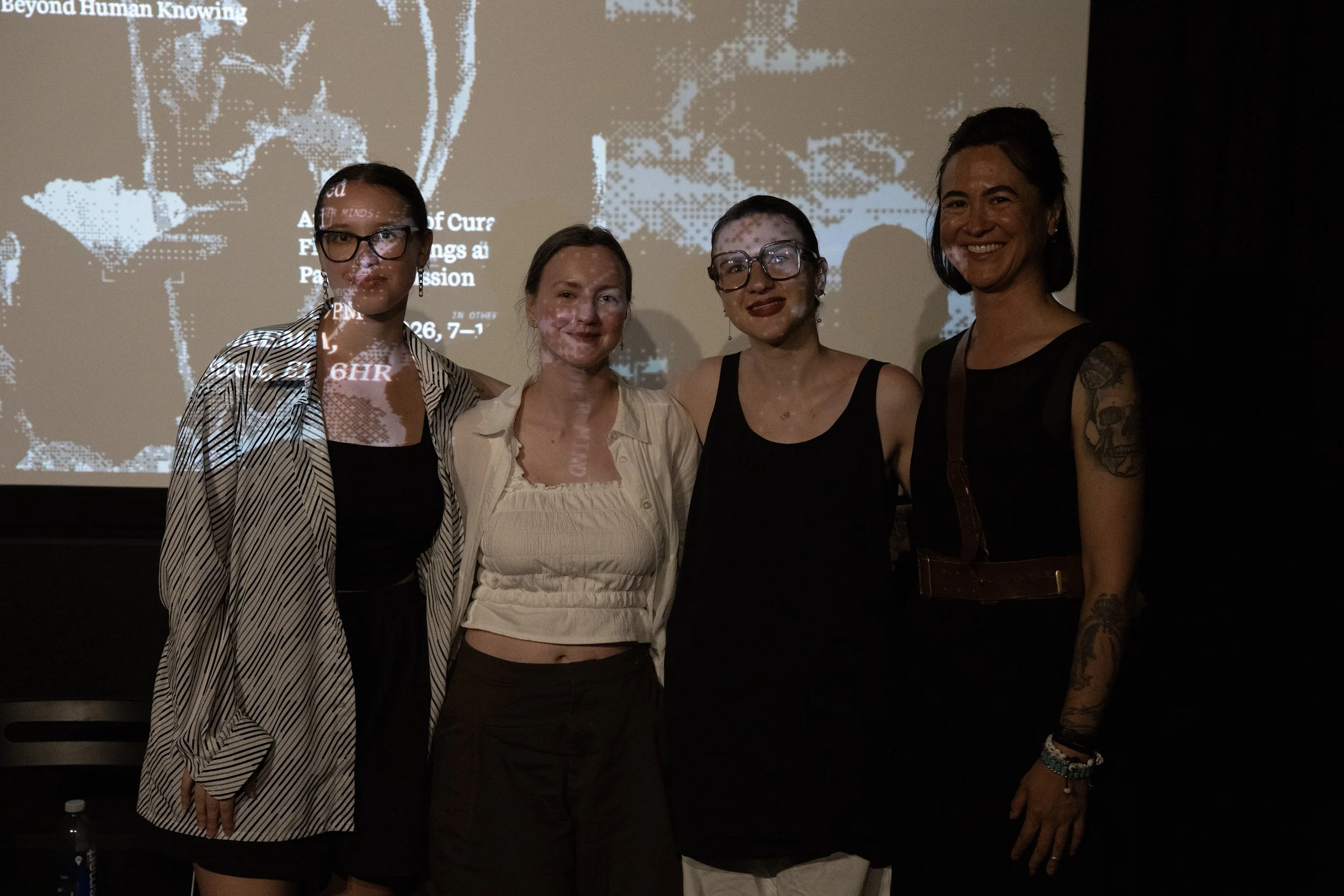
Meet the special guest founders.
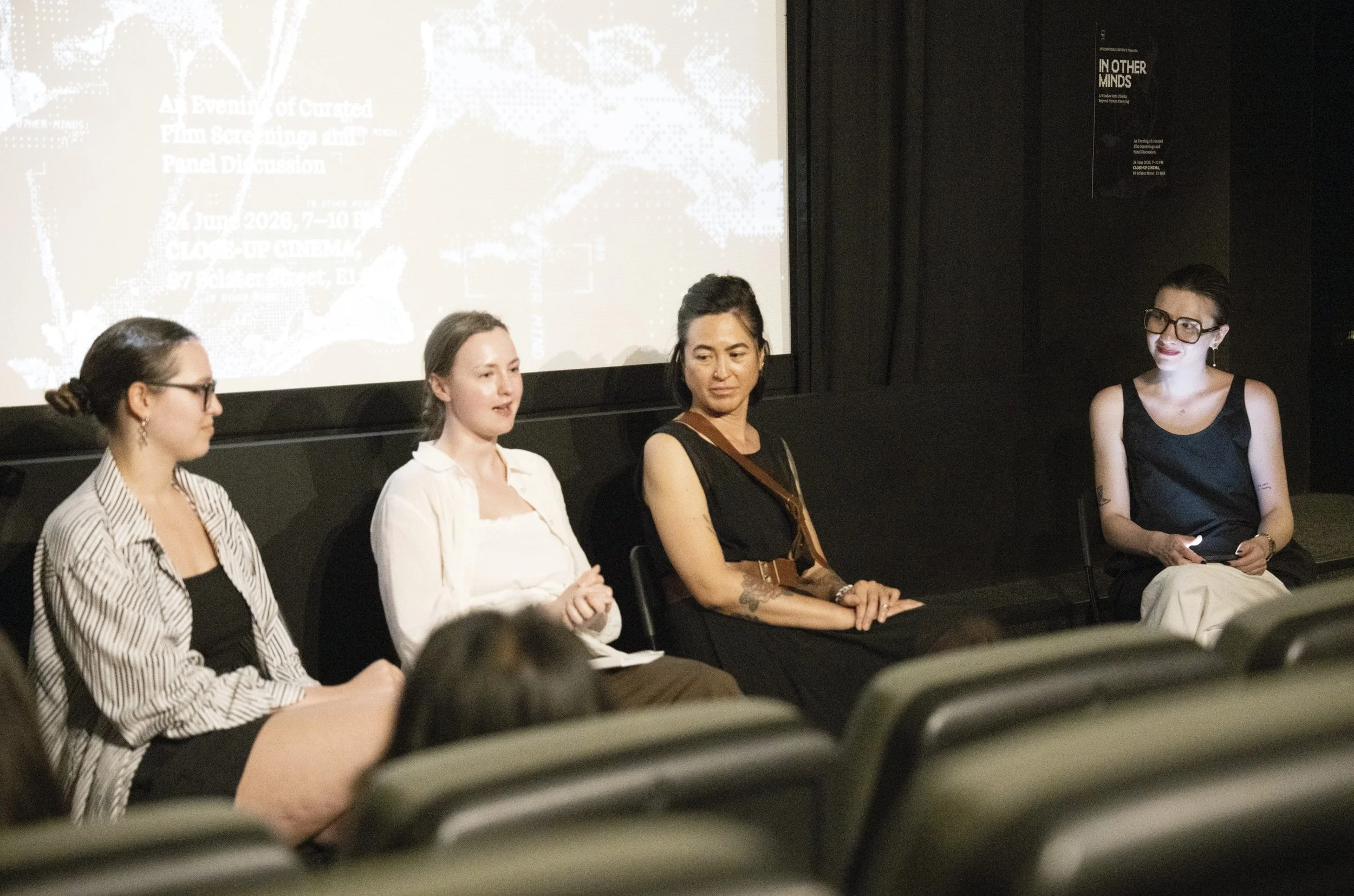
For Collaborative Futures, we met with three founders whose practices have taken different paths but share a common impulse: to question the given, build beyond conventional structures, and create spaces where new ways of working can emerge.
Their work demonstrates that true innovation isn't just about launching new platforms, but about actively redesigning how we gather, build, and sustain collective momentum. By challenging rigid industry norms, they offer practical blueprints for decentralized creation and community-led resilience.
At Otherwhere District Studio, we champion narratives from across the globe—from Eastern Europe and Ukraine to Filipino heritage—where worlds collide and something spectacular emerges in the spaces between, free from preconceived judgment.
We exist to amplify the voices, histories, and hybrid identities that traditional media often overlooks or flattens. By holding space for these rich cultural intersections, we create bold, unvarnished work that honors where we come from while pushing cinema toward where it needs to go next.
DARIA PROTSENKO
Co-Founder of Honeycombs Hub
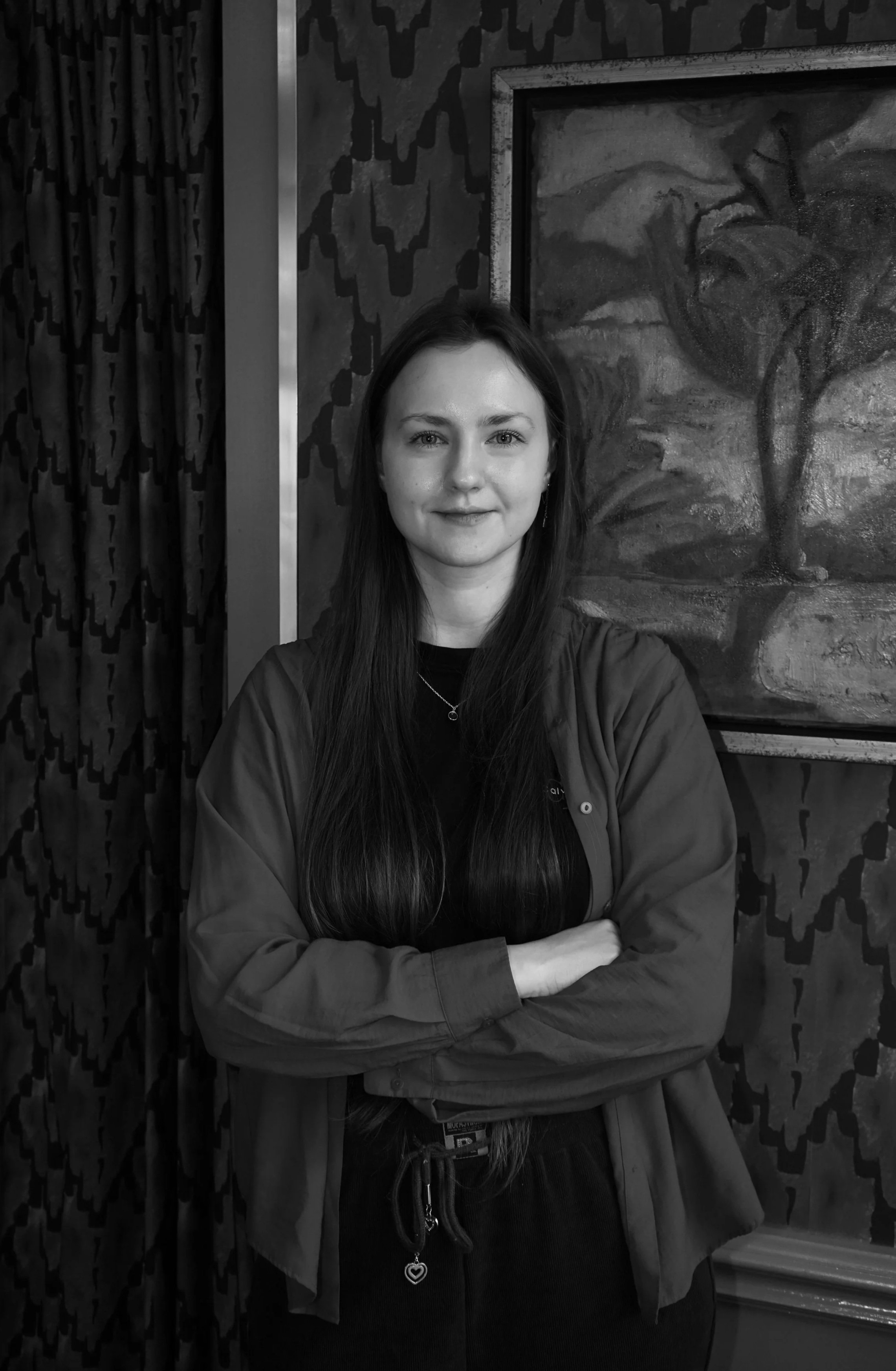
KAROLINA KANSKA
Co-Founder of Honeycombs Hub
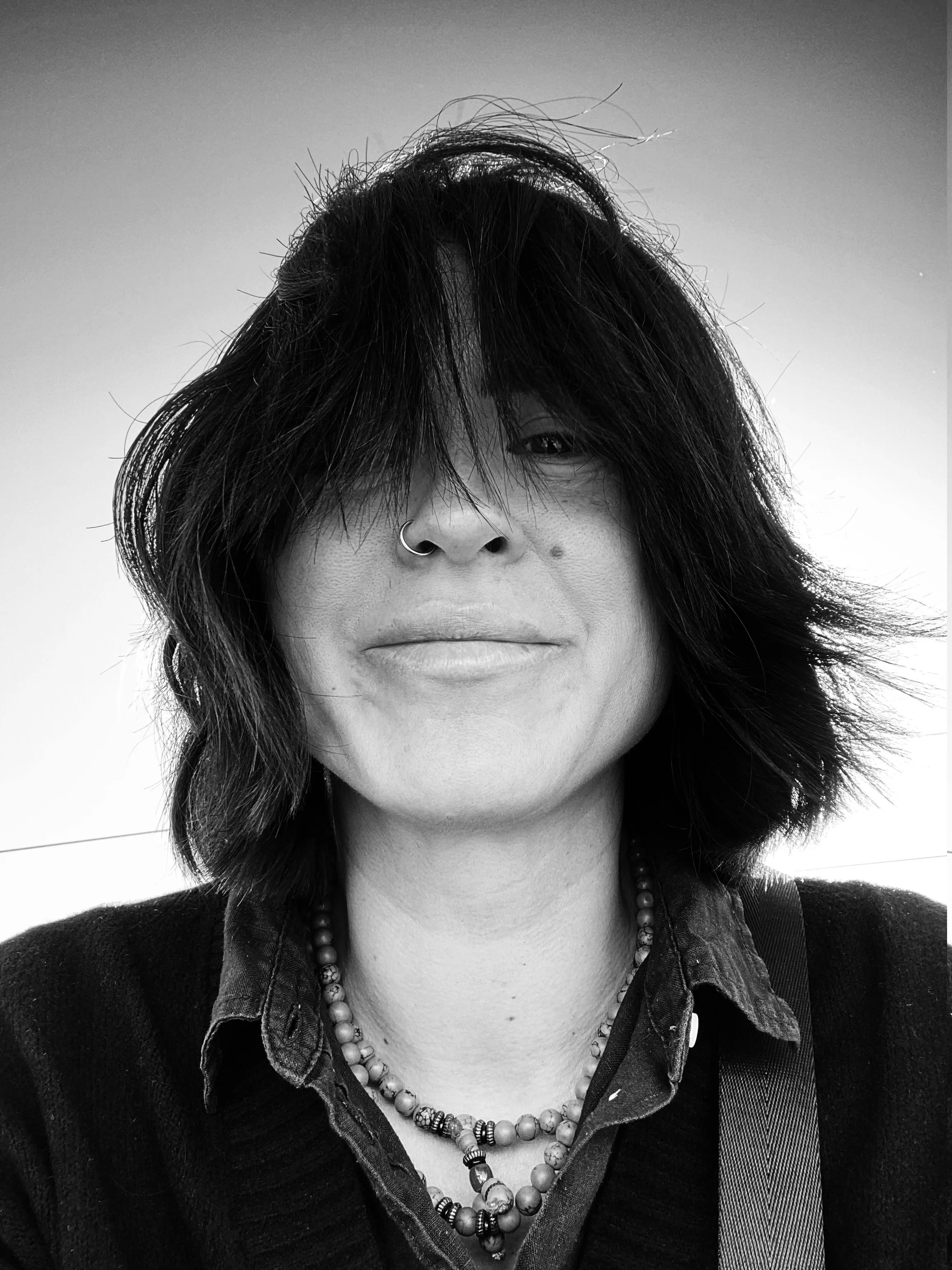
LYNDA LORRAINE
Founder of LYNDA LORRAINE STUDIO
necessary conversational friction
necessary conversational friction